

ENSV

Eurasian beaver

Eurasian beaver — Castor fiber

Eurasian beaver can reshape local environments by felling trees and building dams. This guide explains its return to Sweden and why its activities can alter entire local ecosystems.

Why does the Eurasian beaver have such a large effect on its surroundings?

Eurasian beaver (Castor fiber) is Sweden’s largest rodent and can modify local habitats through tree felling, dam building and changes to water flow. It disappeared from Sweden by the late 19th century and reintroduction began in 1922.

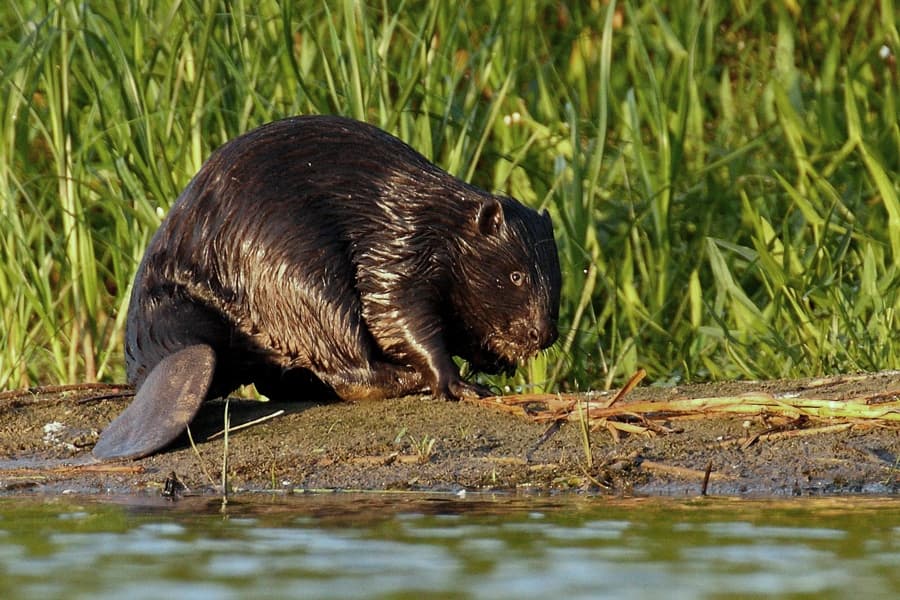
A beaver sitting on a muddy bank by the water, showing its characteristic broad, flat tail.
Klaudiusz Muchowski

Source: SLU: The beaver – a returning ecosystem engineer; SLU and the Swedish Forest Agency · Last verified: 8 September 2026

The effects of beaver dams are highly local. This guide makes no assumptions about impacts on any specific property or water body.

A species that returned

SLU describes how beaver disappeared from Sweden by the end of the 19th century. Reintroduction began on 6 July 1922 and eventually re-established the species.

Sweden’s largest rodent

SLU describes beaver as Sweden’s largest rodent. It is closely associated with water and uses woody vegetation both as food and construction material.

An ecosystem engineer

By felling trees and building dams, beavers can change water flow, flood land and create new local habitats. SLU describes the species as a key species because of this broad ecological influence.

Where people and beavers meet

The same habitat changes that support biodiversity can also create conflicts with roads, forestry or other land use. This page explains the species and its ecological role, not site-specific conflict management.